

 972 Kundenrezensionen
 Die NAS-C01 Prüfung auf die geeigneteste Weise vorbereiten
Jeder hat seine eigene Bevorzugung für die Prüfungsvorbereitung. Auf die geeigneteste Weise kann man sich am besten auf NAS-C01 Prüfung vorbereiten. Das Technikteam von ZertFragen bietet insgesamt 3 Versionen von NAS-C01 Prüfung, nämlich PDF, Online Test Engine sowie simulierte Prüfungssoftware. Alle drei Versionen enthalten die gleichen Zertifizierungsfragen der NAS-C01 (SnowPro Specialty - Native Apps), aber in unterschiedlicher Form. Deshalb hat jede Version ihre eigene Überlegenheit, z.B. mit PDF Version können Sie ohne Internet noch die Zertifizierungsfragen der NAS-C01 lernen. Mit dem Simulationssoftware sind Sie in der Lage, die Prüfungsatmosphäre im voraus zu erleben. Dadurch wir Ihre Angst vor NAS-C01 Prüfung weniger sein!
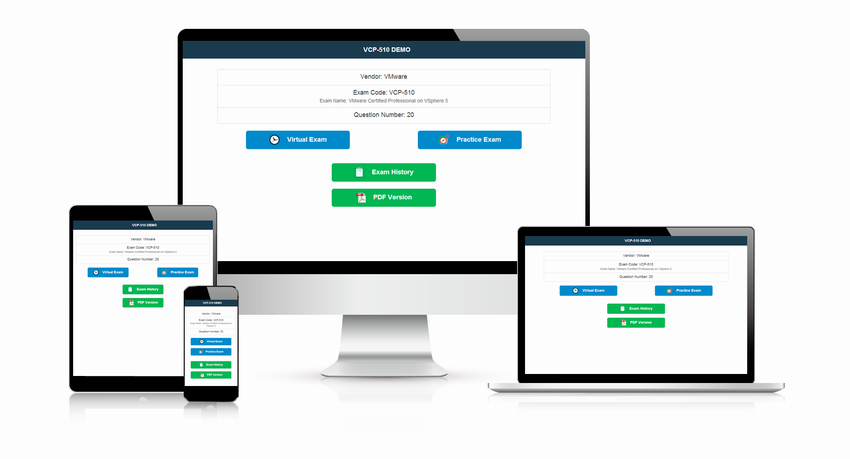
Um die geeigneteste Version auszuwählen, empfehlen wir, dass Sie vor dem Kauf die Demo von drei Versionen zur NAS-C01 Prüfung probeweise zu gebrauchen. Demo ist natürlich kostenlos. Sie können sie auf unserer Webseite gratis herunterladen. Nach dem Kauf bieten wir noch einjährige Aktualisierungsdienst zur NAS-C01 Zertifizierungsfragen. Sie können sie ganz unbesorgt benutzen. Wir glauben, mit der geeignetesten Version können Sie sich am besten auf die NAS-C01 Prüfung vorbereiten.
Wir wünschen Ihnen herzlich, dass Sie mit Hilfe unserer Produkte das NAS-C01 Zertifikat zügig erwerben und ein besseres Leben in der Zukunft führen können. Irgendwann Sie Fragen über NAS-C01 Prüfung haben, können Sie mit uns online kontaktieren oder E-mail schicken!
Einfach und bequem zu kaufen: Um Ihren Kauf abzuschließen, gibt es zuvor nur ein paar Schritte. Nachdem Sie unser Produkt per E-mail empfangen, herunterladen Sie die Anhänge darin, danach beginnen Sie, fleißig und konzentriert zu lernen!
Beste Zertifizierungsfragen der Snowflake NAS-C01 mit günstigem Preis
Durch langjärige Erforschungen und Bemühungen haben IT-Experten aus ZertFrafen die anspruchvollen Zertifizierungsfragen für NAS-C01 gefertigt. Die zuverlässigen Zertifizierungsfragen enthalten echte Fragen aud den früheren NAS-C01 Prüfungen. Fast jede Antworte der Prüfungsaufgaben hat ausführliche Erläuterungen, mit denen Sie die Fachkenntnisse der NAS-C01 Prüfung gut beherrschen können.

Die Zertifizierungsfragen der Snowflake NAS-C01 (SnowPro Specialty - Native Apps) von hoher Qualität kosten Sie nicht viel. Der Preis ist im Vergleich zu anderen Lieferanten sehr günstig. Außerdem bieten wir ab und zu Rabatte auf bestimmte Produkte. Deshalb können Sie sich uns vor dem Bezahlen der NAS-C01 Zertifizierungsfragen online erkundigen, ob es zu jener Zeit einen Rabatt-Code für die NAS-C01 Prüfung gibt.
Sie können sowohl online mit Kreditkarte zahlen oder direkt auf unser Konto überweisen. Ihre persönlichen Informationen werden von uns gut bewahrt, darum brauchen Sie keine Sorge zu machen. Nach dem Bezahlen werden Sie die Zertifizierungsfragen der NAS-C01 sofort per E-mail erhalten.
Schnell die NAS-C01 bestehen ohne Geldverschwendung
Wegen der Verlässlichkeit unserer Produkte haben schon zahlreiche Benutzer die NAS-C01 zügig bestanden. Laut Statistiken dürfen Sie sich nach konzentriertem Gebruach innerhalb nur 20 bis 30 Stunden auf NAS-C01 sehr gut vorbereiten. Viele Prüfungsteilnehmer haben schon ins Arbeitsleben eingestiegen. Die Freizeit ist sehr wenig, deswegen bieten wir die effizienten Zertifizierungsfragen, mit denen Sie die NAS-C01 Prüfung innerhalb einer kurzen Zeit bestehen können.
Weil die Pass-Rate sehr hoch ist, können wir Ihnen garantieren, falls Sie die NAS-C01 Zertifizierungsprüfung nicht schaffen, erstatten wir alle Ihre bezahlten Kosten. Sie brauchen nur, uns das Zeugnis per E-mail zu schichen. Wir tun unser Bestes, um Ihren finanziellen Verlust am möglichsten zu vermindern. Wir ZertFragen ist kundenorientiert und vertrauenswürdig!
Snowflake NAS-C01 Prüfungsthemen:
| Abschnitt | Gewichtung | Ziele |
|---|---|---|
| Installation und Prüfung von Snowflake Native Applications | 20 % | - Installation und Prüfung nativer Anwendungen
|
| Entwurf und Erstellung von Snowflake Native Applications | 35 % | - Anwenden von Snowflake-Best Practices bei der Entwicklung von Workloads für native Anwendungen
|
| Überblick über das Snowflake Native App Framework | 20 % | - Verstehen der Architektur, Funktionen, Werkzeuge und Best Practices von Snowflake
|
| Bereitstellung von Snowflake Native Applications | 25 % | - Entwicklung, Versionsverwaltung und Veröffentlichung nativer Anwendungen
|
Snowflake SnowPro Specialty - Native Apps NAS-C01 Prüfungsfragen mit Lösungen
1. A team developing a Snowflake Native Application is encountering performance issues. They suspect that the warehouse configuration might be suboptimal. They want to dynamically adjust the warehouse size based on the CPU utilization. Which of the following approaches can effectively address these performance concerns and allow dynamic warehouse resizing while adhering to security best practices?
A) Develop a Snowflake Script owned by a dedicated application role. The script queries the view to determine average CPU utilization and dynamically resizes the warehouse using SALTER WAREHOUSE based on predefined thresholds. Grant the 'MODIFY privilege on the warehouse to the application role.
B) Manually monitor warehouse CPU utilization and execute 'ALTER WAREHOUSE statements to resize the warehouse based on observed metrics. Use a dedicated Snowflake user for this purpose with the ACCOUNTADMIN role.
C) Use an external task scheduling system (e.g., Airflow) to query the 'SNOWFLAKE.ACCOUNT USAGE.WAREHOUSE LOAD HISTORY view, calculate the average CPU utilization, and then execute ' ALTER WAREHOUSE using a Snowflake connector with credentials for a user with the ACCOUNTADMIN role.
D) Directly use Snowflake's in-built auto-scaling features to dynamically resize based on load, if available, with appropriate resource monitors setup to control costs. Also, develop a Snowflake Script owned by a dedicated application role, that queries the view to determine average CPU utilization and dynamically resizes the warehouse using 'ALTER WAREHOUSE based on predefined thresholds. Grant the 'MODIFY privilege on the warehouse to the application role.
E) Develop a Snowflake script that queries the view, calculates the average CPU utilization over a period, and then executes 'ALTER WAREHOUSE' statement through the 'SYSTEM$WAIT' function to prevent resource contention. Assign the script's ownership to a dedicated application role.
2. You are tasked with configuring a Snowflake Native Application that leverages Snowpark Container Services for a data transformation pipeline. The pipeline requires access to a public API to enrich dat a. However, the consumer's environment has strict network egress policies. The API endpoint is 'https://api.example.com/vl/data'. Which combination of Snowflake objects and configurations would best enable the container service to access this external API while adhering to the security policies ?
A) Configure a Snowflake network rule specifying 'https://api.example.com/vl/data' as the allowed egress endpoint. Associate this rule with a network policy and assign the network policy to the container service.
B) Create a Snowflake external function that calls the API. Then, call the external function from within the Snowpark Container Service.
C) Create a Snowflake stage with external access integration pointing to 'https://api.example.com/vl/data'. Mount this stage in the container service.
D) Configure an API integration in Snowflake and then use it within the Snowpark Container Service to authenticate and access the API.
E) Use the role to bypass network policies and directly access the API from the container service.
3. You are developing a Snowflake Native Application with a custom setup script. Within the setup script, you need to perform different actions based on whether the application is being installed for the first time in a consumer's account, or if it's an upgrade from a previous version. Which of the following functions or techniques can you reliably use within the setup script to determine if the current execution is a fresh installation vs. an upgrade? (Assume the app version is maintained and accessible as a variable 'current_version' .)
A) Use the table 'APPLICATION_REGISTRY' function to check for an existing entry for the application in the current account.
B) Check if the current version is '1.0', assuming the initial version of the application will always be '1.0'.
C) Use 'SYSTEM$GET_PREVIOUS_VERSION()' function inside the setup script. If it returns NULL, it is the first install.
D) Query the 'INFORMATION_SCHEMAPPLICATIONS' view to check if the application name already exists in the consumer's account.
E) Attempt to read a known persistent setting from the application's metadata. If the setting exists, it's an upgrade; otherwise, it's a fresh install. (Requires metadata setup in a previous version)
4. You have created a Snowflake Native Application that includes a User-Defined Function (UDF) written in Python. The UDF processes JSON data and performs complex calculations. During testing in a consumer's account, you discover that the UDF is running slower than expected. What steps can you take to optimize the UDF's performance? (Select TWO)
A) Recompile the UDF with the latest version of the Snowflake runtime environment.
B) Leverage vectorization techniques within the Python UDF using libraries like NumPy to perform operations on entire arrays instead of individual elements.
C) Switch the UDF implementation from Python to SQL, as SQL UDFs are generally faster than Python UDFs.
D) Reduce the complexity of the UDF by simplifying the calculations and minimizing the amount of data processed.
E) Increase the warehouse size allocated to the consumer's account, as this directly impacts UDF execution speed.
5. You are building a Snowflake Native App that aggregates data across multiple consumer accounts. Your app needs to securely access data in each consumer's Snowflake account without requiring them to share their credentials directly. You are evaluating different options for secure data access. Which of the following strategies are viable and recommended to implement this, maximizing security and minimizing administrative overhead for the consumer?
A) Utilize Snowflake's Native App data sharing capabilities where the provider app shares data products back to the consumer account and the consumer account can use this inside their apps.
B) Require consumers to grant SELECT privileges on their tables directly to the application's account. This necessitates the consumer to manage grants directly.
C) Implement a data sharing agreement where consumers create a share from their account and grant usage to your application's account using secure data sharing. The application account can then create a database from this share.
D) Use Snowflake Data Clean Rooms to allow the app to query data from the consumers accounts.
E) Have consumers create and share a JWT (JSON Web Token) with your application. The JWT will be used to authenticate against their Snowflake instance via an external function.
Fragen und Antworten:
| 1. Frage Antwort: A,D | 2. Frage Antwort: A | 3. Frage Antwort: C | 4. Frage Antwort: B,D | 5. Frage Antwort: A,C |









Amend -
Ich habe meine NAS-C01 Prüfung bestanden. Es ist das beste Studienmaterial, das ich benutzt habe. Daher möchte ich es allen meinen Kollegen empfehlen. Sicherlich werden sie die Prüfung mithilfe des Studienmaterials aus ZertFragen auch mühlos bestehen. Vielen Dank!